OneDine's ROM Turns Server Training Into Minutes, Not Weeks
OneDine's ROM platform compresses server ramp-up from weeks to minutes by replacing handheld menus with text-style ordering, targeting the $5 billion cost of churn.
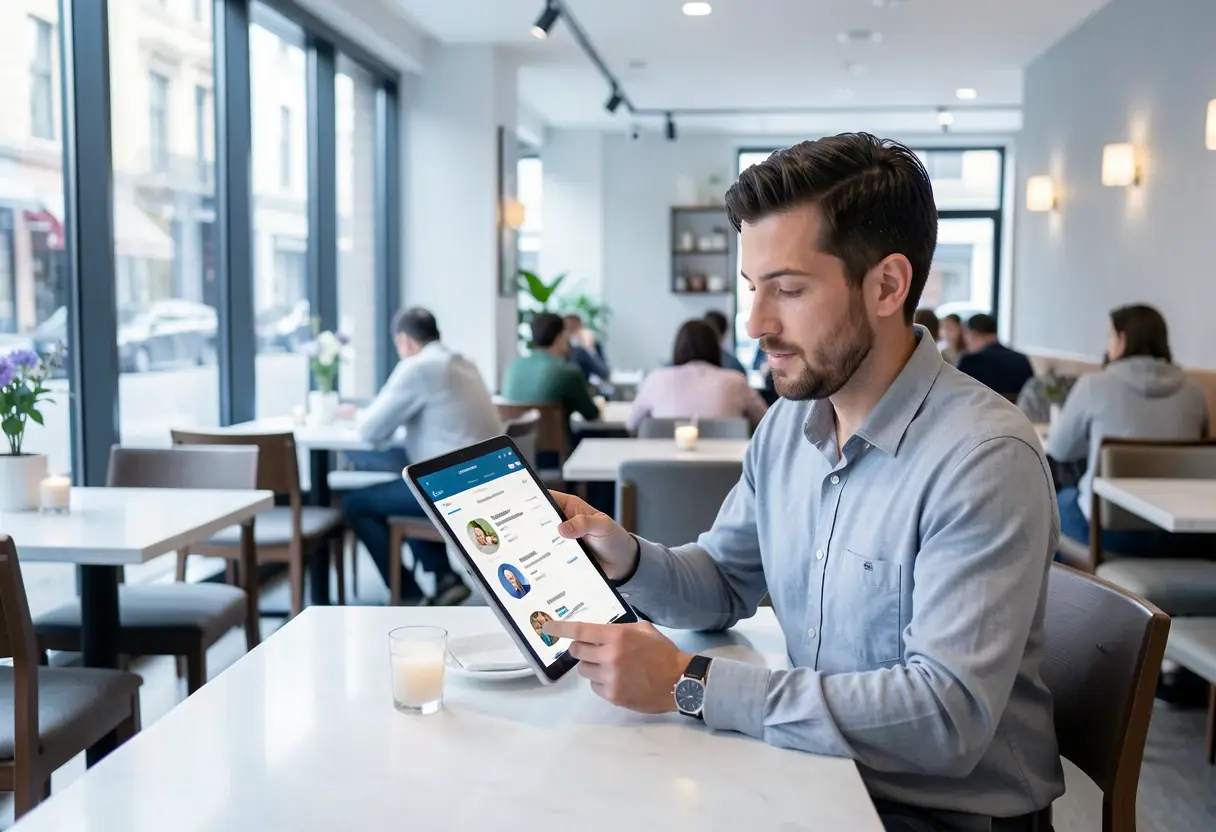
Replacing a single server costs $5,800 on average, and U.S. full-service restaurants burn through an estimated $5 billion a year on that line item. Rom Krupp, CEO of Plano, Texas-based OneDine, thinks operators have been attacking the wrong half of that equation. His answer is a point-of-sale-agnostic platform called Restaurant Ordering Mentor, or ROM, which went live this week at a restaurant in Flint, Michigan.
The churn math is brutal. Per the U.S. Bureau of Labor Statistics, roughly 2.3 million servers clock in each year, with about 423,000 positions unfilled. The National Restaurant Association puts server turnover at 89 percent, and scheduling platform 7shifts clocks average retention at just 110 days. That churn lands on an industry where 42 percent of restaurants failed to turn a profit last year and average net profit was 3.6 percent, per February Association data.
Krupp spoke with about a dozen CEOs and heard the same answer — "we're working on retention." He doesn't buy it. Retention, he argues, is a privilege of restaurants with higher per-person averages; top servers either elevate out of the role or move to houses with bigger checks.
"So retention is not the answer," Krupp said. "They're all trying to fix retention. The problem is that you can't." Operators, he says, need to attack the cost of churn, not churn itself.
What does ROM actually replace?
The system replaces the handheld tablet workflow, where servers hunt through POS-style modifier screens. On ROM, a server types like they would a text message — "R burger, no ketch, on rings" — and the system maps that shorthand to the store's menu data, guiding the ordering flow. It surfaces preferred pairings and upsells, and Krupp says it handles "the entire dietary and lifestyle of the customer as well."
The premise is that a fully proficient server has to master an enormous knowledge load. A Cornell study found that means 150–300 menu items with variants and modifiers, 40-plus cooking and allergy combinations, and 15–20 standard upsell phrases — a level new hires reach only after 90–120 live covers. Krupp's pitch: let the tech carry the ordering knowledge and retrain servers as hosts, not order takers.
"We spend so much time ramping them up to be great order takers that we neglect to make them great hosts," Krupp says. "They're hosting a party. They're hosting an experience."
The Flint rollout backed the speed claim. Before launch, OneDine paid 10 random servers from the city for a few hours, ran a 15-minute orientation, and let them order tableside for two hours from a menu they'd never seen. "By the second hour, they were as fast as pen and paper," Krupp says. Body-cam footage showed eye contact on par with handwriting — within minutes, versus the dozens of floor reps handhelds typically demand.
Implementation is 95 percent automated and integrates into existing POS and recipe systems. The manual 5 percent covers oversight items such as allergy rules and house verbiage. And there's no shorthand training: ROM learns from servers as they type. Krupp claims it compresses the typical four-to-six-week server ramp-up into minutes.
Why the economics matter
A guest has roughly a 30 percent chance of being served by an employee still ramping up, and data shows per-person averages run 8 percent lower during that phase, with error rates 3 percent higher.
"If you're always ramping up people, that means your PPA is always depressed," Krupp says. "We don't even know what we can be because our data has always had this problem."
Notably, OneDine backtracked some of its own initiatives to build ROM. Krupp says consumer adoption of tableside technology, beyond payments, is trending negative — limited-service automation has soured guests on doing the work themselves. "Don't tell me to do it on my own," he says of guests who chose table service. His line now: digital payments yes, everything else stays out of the guest's hands. Whether a minutes-long ramp-up can lift depressed check averages at scale will be the test as ROM moves beyond Flint.
More from Olivia Hart
Show full bio
Staff writer covering regulation, policy and their impact on Restaurant and hotel operations at The Pass Brief.
502 articles