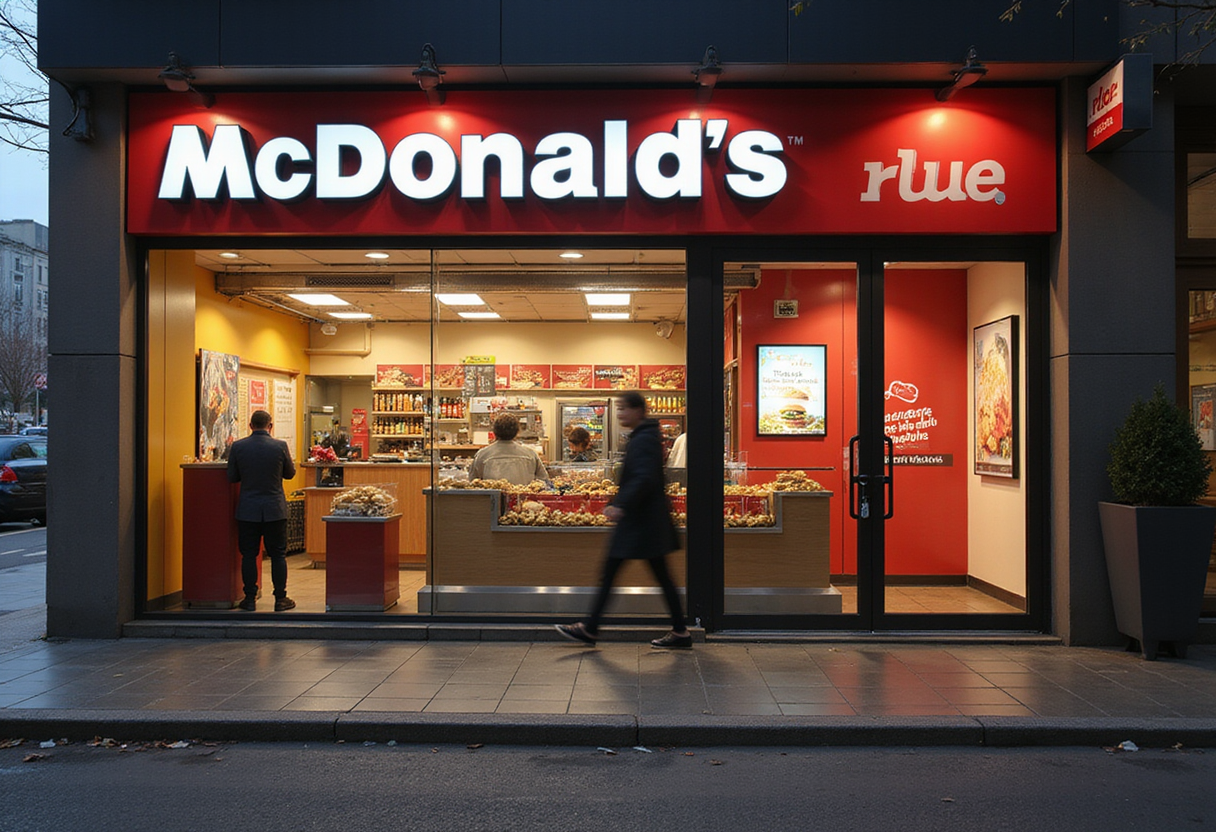
McDonald's Pushes AI Pricing Tools That Gauge Willingness to Pay
McDonald's is deploying AI tools that recommend Big Mac prices based on "customer willingness to pay," aiming to sharpen pricing power amid value-menu wars and franchisee margin pressure.
McDonald's is deploying artificial intelligence tools that suggest what a Big Mac should cost based on "customer willingness to pay," according to a New York Post report.
The system is aimed squarely at pricing — the most sensitive lever in quick-service restaurant economics. Rather than relying on static menu boards or manual, market-by-market price adjustments, the tools generate price recommendations calibrated to what the operator's customer base appears able and willing to spend.
That matters because pricing power has become the central battleground for burger chains. Franchisees, who operate the overwhelming majority of McDonald's roughly 40,000-plus locations worldwide, have spent the past two years squeezed between elevated beef, bun and labor costs and consumer pushback on check growth. Value-menu wars — anchored by competing sub-$5 bundle offers across the major burger players — have compressed margins at the same time that commodity and wage inflation has raised the break-even check.
Dynamic or demand-based pricing attacks that squeeze from one direction: it lets operators capture more margin when local demand supports a higher price point, and it protects traffic when it does not. The reported framing around "willingness to pay" signals that McDonald's wants those recommendations grounded in observed customer behavior rather than blunt across-the-board increases.
The approach also carries obvious reputational risk. The chain faced a consumer backlash in 2024 after a widely publicized incident in which a Connecticut location listed a Big Mac meal above $17, prompting corporate leadership to publicly defend its value credentials and lean into extended value platforms. Any AI-driven system that visibly raises prices at high-traffic times risks reviving accusations of surge pricing — a charge that badly damaged another global chain's experiment with app-based variable menu prices. Executives have repeatedly insisted the technology is about personalization and varied value offers, not charging more for the same sandwich at 7 p.m. than at 3 p.m.
For franchisees, the practical question is who controls the number on the board. McDonald's pricing recommendations have historically been advisory; franchise associations in the U.S. market have pushed back forcefully when corporate initiatives — from software upgrades to remodel requirements — shifted costs onto individual operators. An AI pricing engine that draws on chain-wide data but lands on franchisee P&Ls will live or die by whether owner-operators trust both the algorithm and the split of any upside.
The economics are nonetheless compelling. Even a few percentage points of average check improvement, applied across systemwide sales that exceed $120 billion, represents hundreds of millions of dollars in annual revenue — the bulk of it flowing to franchisee top lines, with McDonald's collecting through rent and royalty structures tied to sales.
Menu engineering through machine intelligence also fits a broader industry pattern. Major chains have invested heavily in predictive ordering, dynamic kitchen display systems and AI-driven drive-thru voice ordering, all aimed at trimming labor percentage and waste while protecting speed of service. Pricing has been the last major menu variable still set largely by hand.
McDonald's has not disclosed which markets will receive the willingness-to-pay tools first, the pricing of the technology itself, or whether recommendations will differ between company-operated and franchised locations. Expect scrutiny from franchisee groups and state regulators attuned to algorithmic pricing debates — and expect rivals to accelerate their own dynamic-pricing pilots if early results show McDonald's pulling meaningful margin from its menu boards.
More from Olivia Hart
Show full bio
Staff writer covering marketplaces and e-commerce at The Pass Brief.
57 articles