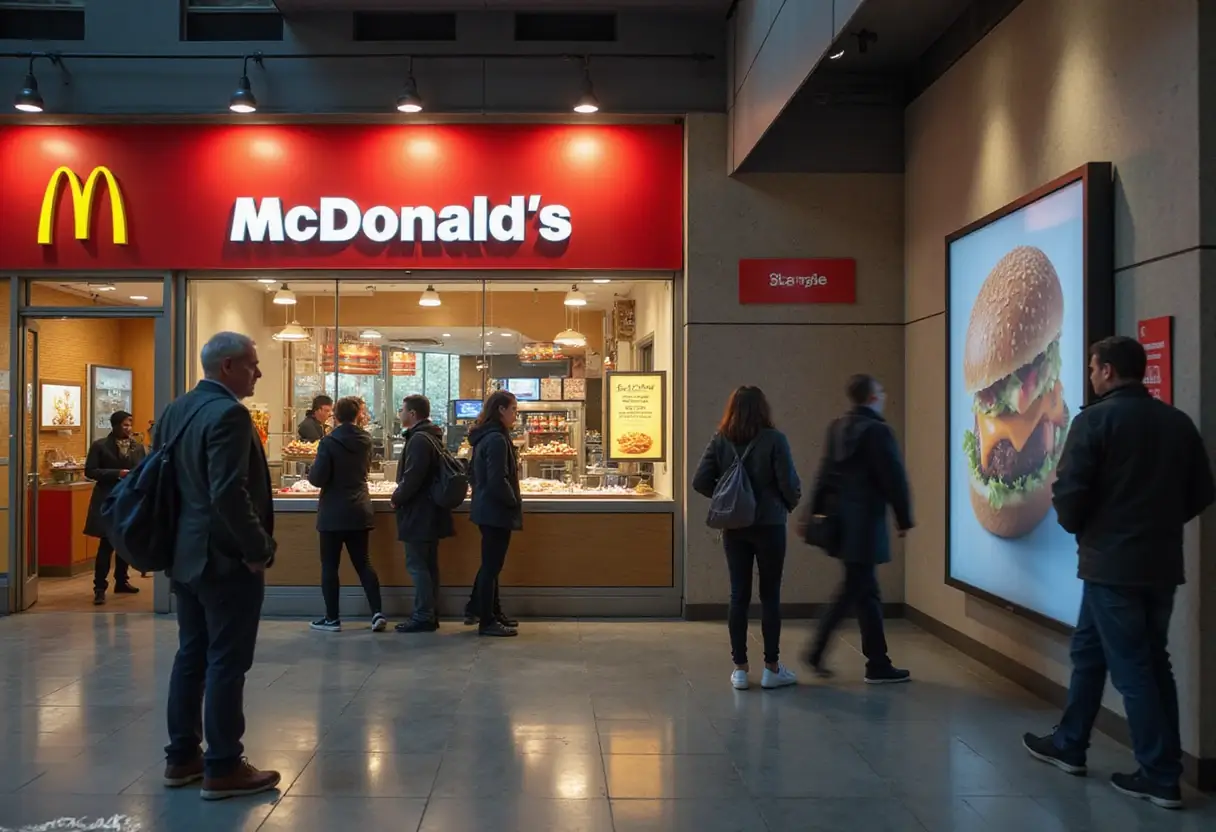
McDonald's Ends FIFA World Cup Sponsorship After 30-Plus Years
McDonald's is dropping its FIFA World Cup sponsorship after 30-plus years, pivoting away from 'borrowed IP' after a record 100-market campaign delivered just 0.8% U.S. sales growth.

McDonald's is ending its global FIFA World Cup sponsorship after more than 30 years, walking away from the quadrennial tournament for the first time since 1994 as it reworks a marketing strategy that has stopped producing sales.
"As the current agreement reaches its conclusion with this summer's Men's World Cup, so will McDonald's global FIFA World Cup sponsorship," the company said in a statement.
The timing tells you why. McDonald's built its campaign around the most recent tournament into the largest global marketing effort in its history, spanning roughly 100 markets. The return was thin: U.S. same-store sales rose just 0.8% in the second quarter, and executives expect them to fall in the current period. That result landed despite a packed promotional calendar that included the World Cup and a new value platform — two levers that should have moved traffic and didn't.
What does this change for McDonald's marketing?
The core shift is philosophical. Executives are scaling back what they call "borrowed IP" — renting cultural moments like the World Cup rather than building brand properties of their own.
"I think we've become overly reliant on borrowed IP," Chief Marketing Officer Morgan Flatley said in an interview last month. "And I think we need to be very selective and do it a few times versus becoming a frequent piece of our calendar."
In plain terms, the operator is questioning the return on expensive third-party sponsorships when its own promotions struggle to lift comparable sales. A 0.8% quarterly gain on the biggest campaign in company history is the kind of number that forces a budget review.
Is this about FIFA's troubles?
McDonald's says no. The company stated that its decision is unrelated to recent headlines around FIFA, including a growing power struggle between FIFA and UEFA, Europe's soccer governing body. That conflict connects, at least loosely, to a suspended ban that let U.S. striker Folarin Balogun keep playing during the latest tournament despite a red card that should have sidelined him for the team's final game.
The chain framed the exit as a calendar-and-focus decision, not a reaction to governance drama at the sport's top level.
Is McDonald's leaving sports entirely?
Hardly. The company is putting its name on a Chicago soccer stadium used by Chicago Fire FC, to be called McDonald's Park. It sponsors Formula 1 in Latin America and Ligue 1 McDonald's in France. Long-running properties such as the McDonald's All-American Games continue.
"Sport and culture will remain important ways we connect with our fans as we sharpen our focus on creating distinctive McDonald's experiences that deepen those connections year-round," the company said.
The difference is scope and ownership. Instead of one massive, four-year global bet, the strategy tilts toward regional deals and owned platforms that run continuously — closer to how the chain already operates its All-American Games than how it activated the World Cup.
The company struck a warm note on the way out: "For more than 30 years, McDonald's and FIFA have brought fans together around one of the world's biggest cultural moments, and we are proud of the memories and experiences we have created with fans and globally over that time."
The exit takes effect after this summer's Men's World Cup concludes. With U.S. same-store sales expected to turn negative this quarter, the real test of the new strategy will be whether selective, year-round marketing can lift comps where the biggest campaign in company history could not.
More from Olivia Hart
Show full bio
Staff writer covering regulation, policy and their impact on Restaurant and hotel operations at The Pass Brief.
558 articles