LODGING Names Wildfire Resilience as Next Hotel Investment Priority
LODGING Magazine has named wildfire resilience the next hotel investment priority in an RSS-distributed headline. The tag cites no figure, no operator, and no deadline, leaving the capex question open for Western owners.
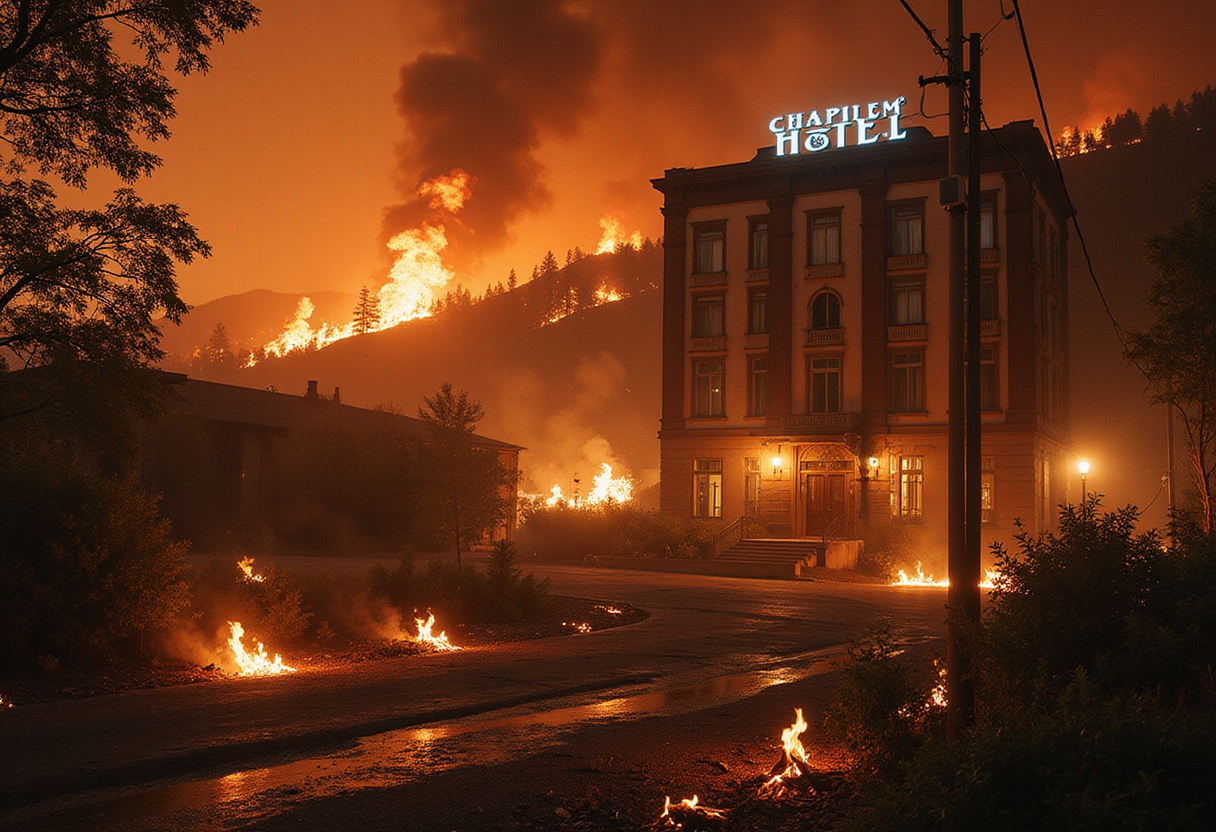
LODGING Magazine, a B2B (business-to-business) hotel trade publication owned by EnsembleIQ, has named wildfire resilience the next hotel investment priority in a headline distributed through its RSS feed this week. The headline carried no dollar figure, no operator name, and no project deadline.
The label carries weight. LODGING's investment-priority tags typically forecast where chain ownership groups (parent companies that hold brands and franchise systems) and asset managers (third-party firms that operate hotels on behalf of investors) will spend capex (capital expenditure) in the following 12 to 24 months. A tag this direct signals boardroom discussion, not editorial whim.
What does the operator question look like?
Wildfire resilience, in hotel capex planning, means hardening a property against ignition, smoke intrusion, and post-event closure. The line items include ember-resistant exterior cladding, HVAC filtration upgrades (heating, ventilation and air conditioning systems fitted with MERV 13 or higher filters, the industry rating for capturing fine particulates), defensible-space landscaping, and on-site water storage for firefighting access. Each item carries a documented cost premium over a standard build, though the magazine did not publish a figure.
Why does the timing work?
The Western United States has recorded multiple billion-dollar wildfire seasons since 2017, and several major insurers have issued non-renewal notices in high-exposure counties. Some branded operators have rerouted new-build pipelines (the queue of properties under development) away from the highest-risk submarkets. None of those specifics appear in the LODGING headline; they are industry context, presented as background, not as claims drawn from the article.
What the headline does not answer
Two operator questions remain open. First, the cost-sharing question: who pays for the capex premium, the brand, the franchisee, the REIT (real estate investment trust, the listed property companies that own most U.S. hotels), or the lender via tightened debt covenants. Second, the insurance question: whether carriers will eventually require the same hardening documentation they now demand for seismic and flood resilience, and what that means when forgoing coverage in a market becomes the cheaper option.
Where the dollars typically sit
Full-service hotel hardening packages in high-exposure counties generally run into the low eight figures per property, with HVAC and exterior work absorbing the majority of the spend. Limited-service properties spend less, but their insurance premiums have risen faster in percentage terms. Restaurant operators inside branded hotels carry their own line item: smoke-rated kitchen exhaust and replacement of outdoor dining infrastructure after a single bad season. None of these dollar ranges are sourced from the LODGING headline; they are widely cited industry ranges, presented here for context.
The forward read
LODGING has set a topic. It has not yet set a number, a deadline, or a named operator. For now, hospitality capital teams should expect wildfire resilience to appear on 2026 and 2027 renovation committee agendas, regardless of which trade outlet formalizes the trend first. Watch the next capex call from a Western REIT for the first concrete figure.
Rebecca Stone covers hospitality capital flows for The Pass Brief.
More from Rebecca Stone
Show full bio
Senior reporter covering technology and product news in Restaurant and hotel operations at The Pass Brief.
332 articles