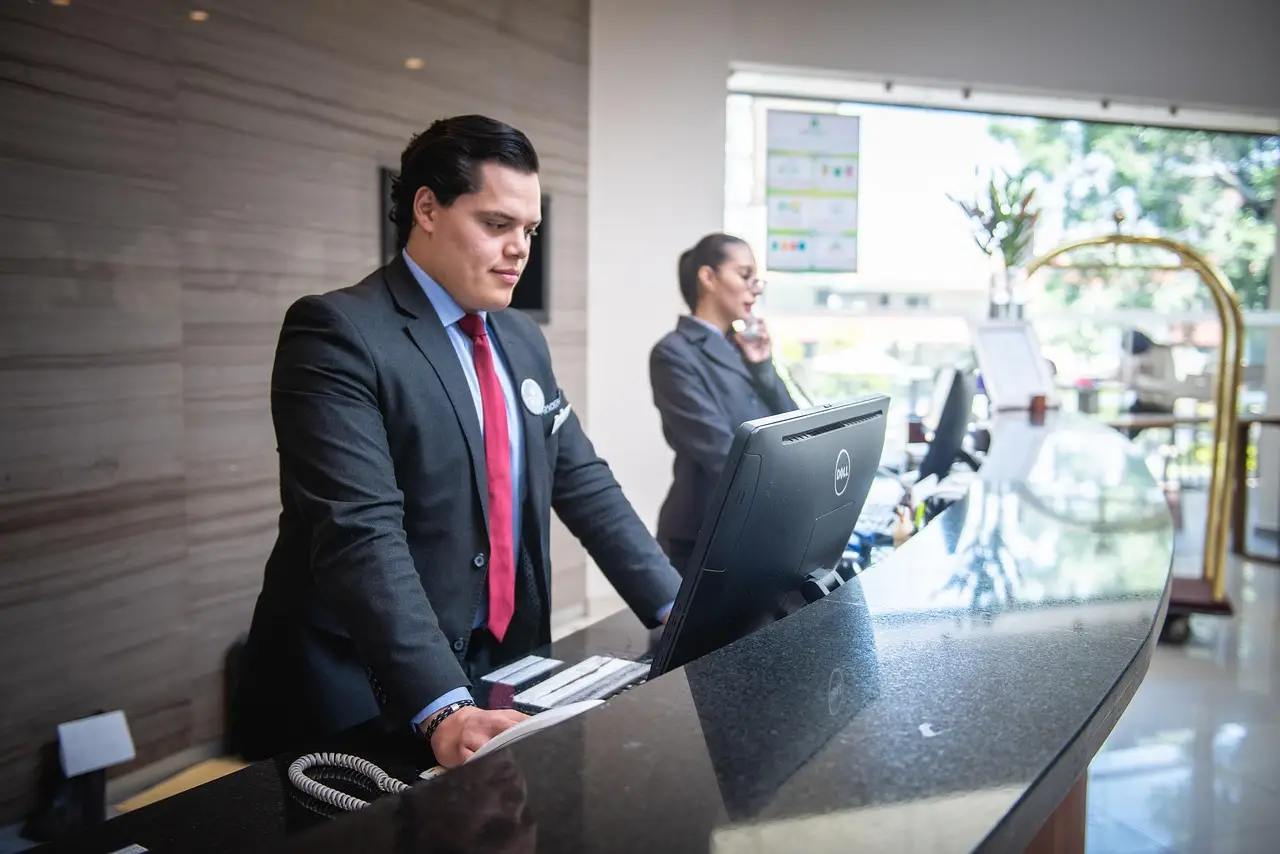
Lobby AI Returns Two Hours a Day to Hotel Sales Agents
Lobby, a Zurich startup, says its AI layer between inbox and PMS returns two hours a day to hotel sales agents on group bookings. CTO Labinot Sadiki: the technology is ready, trust is not.
Lobby, a Zurich-based startup, claims its AI layer gives hotel sales agents about two hours a day back by automating group and B2B booking requests that still arrive by email. Co-founder and CTO Labinot Sadiki set the figure at the HSMAI Commercial Strategy Conference MEA 2026 in Dubai. Two hours, not eight. That gap is deliberate.
Sadiki, known to most people as Lailo, targets one of the least glamorous corners of hotel commerce: group bookings, amendments and cancellations that travel through inboxes, travel agency extranets and web forms before a human copies them into the property management system.
What does the system replace?
The manual process eats time before any work starts, Sadiki said. An email arriving after hours waits until morning. The agent then reads a long list of requirements, opens a second tab and clicks through a PMS that is "usually not very user friendly," then copies data across. "That's where human error usually happens." A group booked three months out will usually return a day or two before arrival with changes: an earlier arrival, a late check-out, an extra room. Each time, someone rebuilds the context from scratch. "If you need to constantly refocus on the same booking," he said, "that takes a lot of your mental capacity."
The Lobby software sits between the incoming channels and the PMS. It classifies each request as a new booking, an amendment or a cancellation, applies the hotel's own rules and learns from months of booking history. Because it remembers prior actions, an amendment two months later does not start from zero.
Why not automate everything?
Rules cover the routine. Everything else needs, in Sadiki's words, "always this special human touch you want for certain bookings." When the AI hits the limits of what it knows, it asks a person: "I have this inquiry, I'm not sure what to do." The person answers once, and the system remembers. Two hours is today's figure. As the knowledge base grows, more requests flow straight through, apart from bookings a hotel deliberately keeps for itself, such as a key account.
Sadiki argued the quieter value comes from AI watching how unstructured information moves through a business. Traditional analytics count emails and bookings, but nobody tracks the flow itself. In one case, after a few weeks of analysis, a customer used that data with its own AI to write an onboarding handbook for new employees. Knowledge that lived only in people's heads was finally written down.
Is the technology ready?
"I think we are there technically," Sadiki said. "But trust-wise, it's not there yet." He sees two obstacles: mindset and evidence. People still treat AI as a tool rather than a coworker. And hotels rarely measure a baseline first: how long requests took, how many errors were made. "If AI is one or two percent better than humans, you already have a win in your books, and it only gets better from there."
He was certain AI is judged more harshly than people. Talk of superintelligence breeds expectations of perfection from day one, when the reality is a learning curve "like every new coworker you hire. You need to teach them your specialties and details, which are different in each property, even within the same organisation." Asked about a driverless car that reversed through a level-crossing barrier that morning after years of strong safety record, he pointed to the pattern. "People tend to pick certain events and exaggerate them. But if you step back and look at the data, humans make more mistakes and have highs and lows. If you're a bit unwell, you don't focus as much. That's what the data shows."
How do hotels buy this without an IT project?
Sadiki's answer applies beyond startups. "Nobody wants those year-long IT projects that keep getting pushed to the next quarter." Start with why, not what, because people arrive knowing what they want rather than why. Then cut the scope to the minimum that delivers a visible result within weeks. A small vendor's advantage: weekly access to an engineer and changes the next day.
Some of Lobby's earliest customers sit in the Middle East and Africa. The Middle East, he said, is unusually open to technology and gives honest, regular feedback. Africa offered a different case: a long list of small operational problems that analysis could expose and AI could reduce or remove.
His advice to founders entering hospitality: "Just be brave and talk to people." Every conversation teaches the language of the industry and "their pains and their gains: what they really want out of technology." His parting point was patience on both sides, learning curves for people and system alike. Once the AI reaches the level of a senior colleague, "you have that golden point where you can scale that senior person into a thousand agents, whether it's high season or low season."
The claim of two hours rests on a startup's own figure, without an operator's baseline audit published. Sadiki's own advice, measure before you compare, remains the test most hotels have yet to pass.
More from Marcus Bennett
Show full bio
Market editor covering technology and product news in Restaurant and hotel operations at The Pass Brief.
833 articles