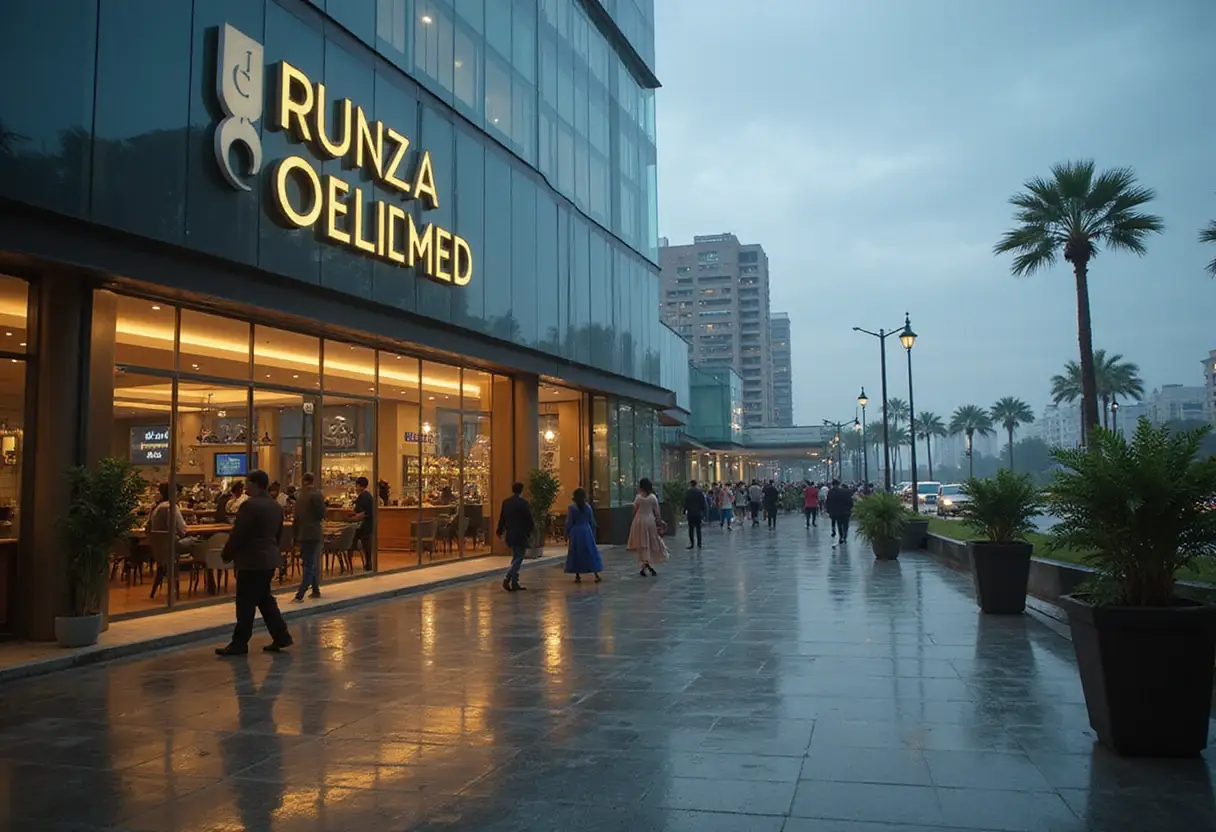
India needs 120-125 million sq. ft. of hospitality real estate by 2035
CBRE projects 120-125 million square feet and 190,000-210,000 hotel keys by 2035, as gateway cities, domestic travel and premiumisation reshape demand in India.

By Rebecca Stone
India’s organised hospitality sector will require approximately 120-125 million square feet of additional real estate by 2035, equal to roughly 190,000-210,000 new hotel keys, according to CBRE Research.
The estimate spans economy, midscale, upscale, upper-upscale and luxury hotel categories. CBRE Research sets it out in its latest report, Beyond Core: A 2035 View of India’s Alternate Sectors – Part I. Market selection, operating model, land availability and alignment with business, leisure and experience-led travel will determine where that supply gets built.
Where will the next hotels go?
CBRE frames the opportunity as broad based rather than confined to traditional hotel markets. Anshuman Magazine, CBRE’s chairman and CEO for India, South-East Asia, the Middle East and Africa, said:
“India’s hospitality opportunity is becoming increasingly diverse, with growth extending beyond traditional hotel markets and formats. As business, leisure and experience-led travel evolve, developers and operators are taking a more market-led approach to identifying opportunities.
“This involves understanding the demand drivers of each destination and building strong operating partnerships. The focus is moving beyond adding inventory to creating differentiated hospitality assets that remain relevant to changing traveller preferences and deliver sustainable long-term value.”
That shifts the test from room count to asset relevance. New supply must fit a destination’s demand mix, not merely a city’s ambition. Differentiated hospitality assets are the proposed bridge between added keys and sustainable long-term value.
What are gateway cities worth?
CBRE reports that gateway cities account for approximately 35% of branded hotel inventory and generate about 50% of sector revenues. Their advantage rests on corporate travel, MICE (meetings, incentives, conferences and exhibitions) and transit demand. Revenue therefore runs ahead of their share of rooms. The arithmetic is attractive, though not a guarantee for every project.
Outside those urban markets, leisure, cultural and spiritual destinations offer scalable opportunities for resort-led and experience-driven formats. Their growth path differs from gateway-city hotels, with demand tied more closely to destination travel than corporate movement. Local demand analysis will matter.
Who carries the capital?
CBRE reports approximately USD 905 million in hospitality real estate investment between 2024 and H1 2026. Investor interest is shifting toward platform-level commitments, strategic joint ventures and income-generating assets. Management contracts and franchise partnerships can help operators expand with lighter balance sheets. The reported benefit is straightforward: scale with less balance-sheet exposure.
CBRE identifies four routes to scale: management contracts, franchise partnerships, brownfield acquisitions and rebranding. Management contracts and franchise partnerships are distinct operating structures that can expand operators with lighter balance sheets. Brownfield acquisitions involve existing hotel properties, while rebranding repositions an existing asset. All four can help build scale and accelerate market entry.
Can domestic demand lift rates?
Rami Kaushal, managing director of Consulting and Valuation Services for India, the Middle East and Africa at CBRE, tied domestic tourism’s rise to rising discretionary spending, improved connectivity and growing interest in leisure, wellness and destination-led travel.
“Domestic tourism is emerging as a structural driver of India’s hospitality sector, supported by rising discretionary spending, improved connectivity and growing interest in leisure, wellness and destination-led travel.
“Operators are increasingly pursuing strategic premiumisation across luxury, lifestyle and resort formats to capture evolving traveller preferences. Supported by healthy demand fundamentals, this trend is expected to strengthen pricing power and support ADR growth across segments.”
CBRE also identifies selective premiumisation across luxury, lifestyle and premium resort formats as a potential source of stronger pricing power. ADR (average daily rate) is the operating measure the report expects to benefit across segments. CBRE calls the premiumisation selective, not category-wide.
Domestic demand provides the demand side. Platform investment and operating partnerships provide the delivery side. If execution follows CBRE’s market-led approach, the 2035 target becomes a build-out schedule with defined revenue pools, not merely an inventory race. The pipeline is large. The filtering mechanism will be economics.
More from Rebecca Stone
Show full bio
Senior reporter covering technology and product news in Restaurant and hotel operations at The Pass Brief.
556 articles