Hotel Labor Policy Faces a Senate Math Problem in 2027-28
Democrats' 54-seat Senate majority falls six votes short of 60, leaving major hotel labor changes stalled while federal tip and overtime deductions expire after 2028.

By Daniel Okafor
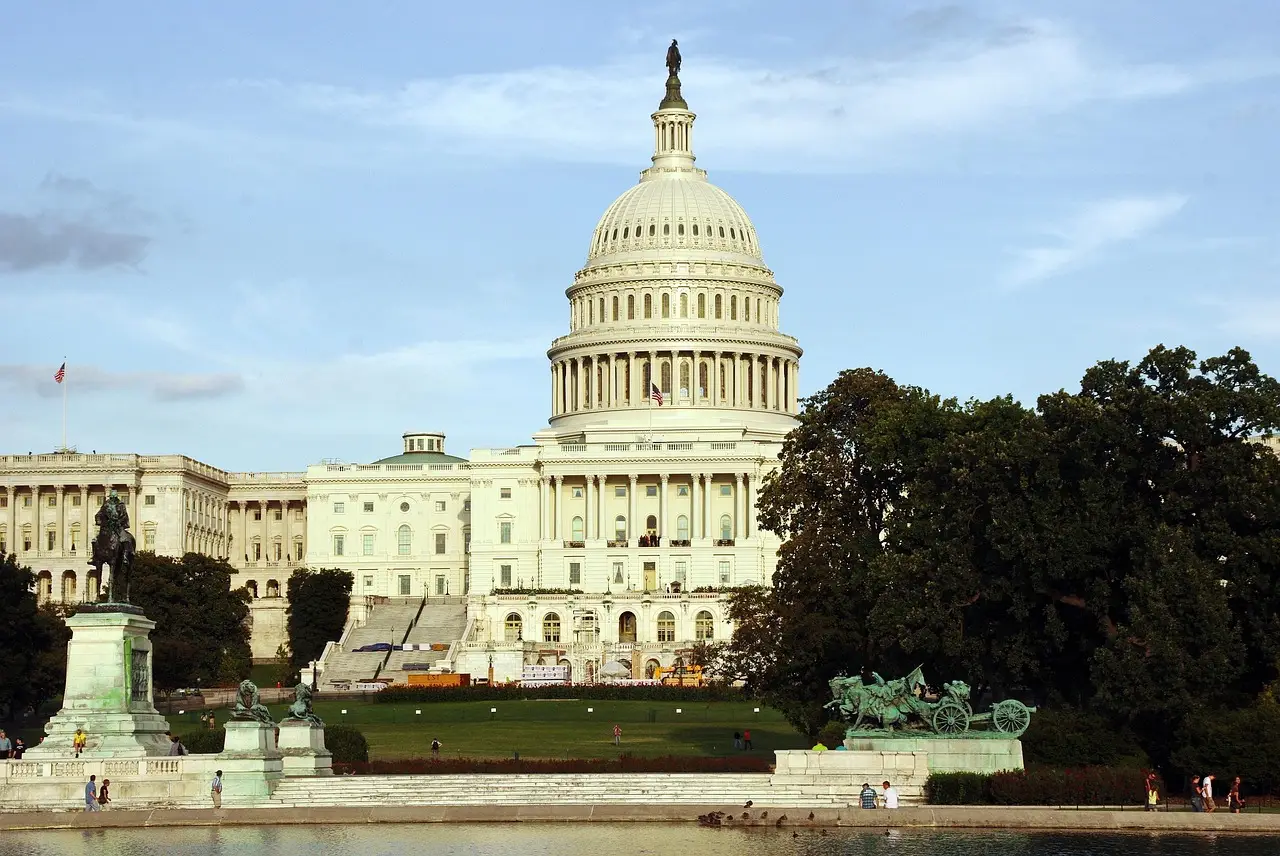
Democrats enter the 2027-28 Congress with an estimated 54 Senate seats, six short of the 60 votes needed to clear a filibuster on major labor legislation. After significant House and Senate wins on Nov. 3, Democrats will control both chambers in January, but the arithmetic sharply limits what they can enact alone.
Most legislation needs 60 Senate votes, while overriding a presidential veto requires two-thirds of both chambers, a threshold Democrats will not approach. Any bill changing federal wage law or the franchise joint-employer standard therefore needs Republican votes and White House support, not merely control of Congress.
Can Congress rewrite franchise labor rules?
The joint-employer standard determines when a brand or franchisor can be held legally responsible for workers employed by a franchisee or management company. It has careened back and forth for more than a decade, forcing hotel owners and franchisors to track legal responsibility across corporate and property lines.
The Republican Save Local Business Act (H.R. 4366) would amend the National Labor Relations Act and Fair Labor Standards Act. It would limit joint-employer status to a company that “directly, actually, and immediately” exercises significant control over essential terms of employment.
The House Education and Workforce Committee reported the bill, and on Jan. 13, 2026, the House adopted a rule to bring it to the floor by a vote of 214-207. That procedural vote opened a path to consideration; it did not enact the standard.
The American Franchise Act (S. 3525 in the Senate and H.R. 5267 in the House) would apply a similar test specifically to franchisors. Senate cosponsors include independent Angus King of Maine, who caucuses with Democrats, and Republican Susan Collins of Maine, who just lost her seat. Their sponsorship signals interest extending beyond Republicans.
Democrats reintroduced the PRO Act (H.R. 20, S. 852) in March 2025. It would establish a broad joint-employer standard covering indirect and reserved control. House Democrats argue that the standard would protect franchisees.
What happens to wages and tip deductions?
The federal minimum wage has remained $7.25 an hour since 2009. In states that use the federal floor, the cash wage for tipped workers remains $2.13, making pay structure and applicable state rules central to a hotel’s labor-cost exposure.
The One Big Beautiful Bill Act, signed July 4, 2025, created federal income-tax deductions for tax years 2025 through 2028:
- Qualified tips: The deduction is capped at $25,000 and phases out for incomes above $150,000, or $300,000 for joint filers.
- Qualified overtime: The deduction covers up to $12,500, or $25,000 for joint filers.
- Scope and sunset: Neither deduction changes Social Security or Medicare taxes, and both expire after 2028 unless Congress extends them.
The Raise the Wage Act of 2025 (H.R. 2743, S. 1332), sponsored by Rep. Bobby Scott, Democrat of Virginia, and Sen. Bernie Sanders, independent of Vermont, would raise the federal minimum to $17 by 2030, then index it to median-wage growth.
That would put the floor $9.75 above its current level, more than double. The proposal also would phase out the tipped subminimum wage by raising tipped cash pay in steps from $6 to $17.
House Republicans also advanced the Tipped Employee Protection Act (H.R. 2312), which would change how the Fair Labor Standards Act defines a tipped employee. In September 2026, the Congressional Budget Office estimated that the bill would likely produce a larger tipped-worker classification.
Which scenarios could shape 2027-28?
Three scenarios, not mutually exclusive, could shape hotel labor policy:
- Stalemate. No major federal labor law changes in 2027 or 2028. A $17 minimum wage or a PRO Act-style joint-employer standard would face a near-certain veto. Writing the Republican joint-employer test into law would require action in the lame-duck session before January or unlikely Democratic support in the new session.
- A bipartisan deal on deductions. Both parties have expressed support for tax relief on tips, creating reason to negotiate before the tip and overtime deductions expire after 2028. The agreement would determine whether operators and workers retain those tax benefits beyond the current sunset.
- A confirmation and oversight fight. Democrats will chair the committees overseeing labor policy and decide which labor nominees receive confirmation. The Senate could slow or block nominees and use hearings to examine the administration’s labor rules.
After two confirmations on Aug. 7, 2026, the National Labor Relations Board has a 3-1 Republican majority and one empty seat. The Center for Workplace Compliance and Ogletree Deakins list these terms:
- Chairman James Murphy: Dec. 16, 2027.
- Scott Mayer: December 2029.
- James Macy: August 2030.
- Democrat David Prouty, reconfirmed in August: August 2031.
If Murphy’s seat remains unfilled, the board still retains a three-member quorum, but its Republican majority would shrink to 2-1.
What should hotel operators do now?
For hotel operators, the next two years are a planning window: audit pay and tip practices, clarify what the brand controls versus the property, and monitor state legislatures, where change can arrive faster than in Washington.
Federal wage and joint-employment rules may hold through 2028, but expiring deductions, a possible NLRB shift and faster state action make the next two years a period for operators to prepare rather than wait.
More from Daniel Okafor
Show full bio
Correspondent covering companies, deals and strategy in Restaurant and hotel operations at The Pass Brief.
636 articles