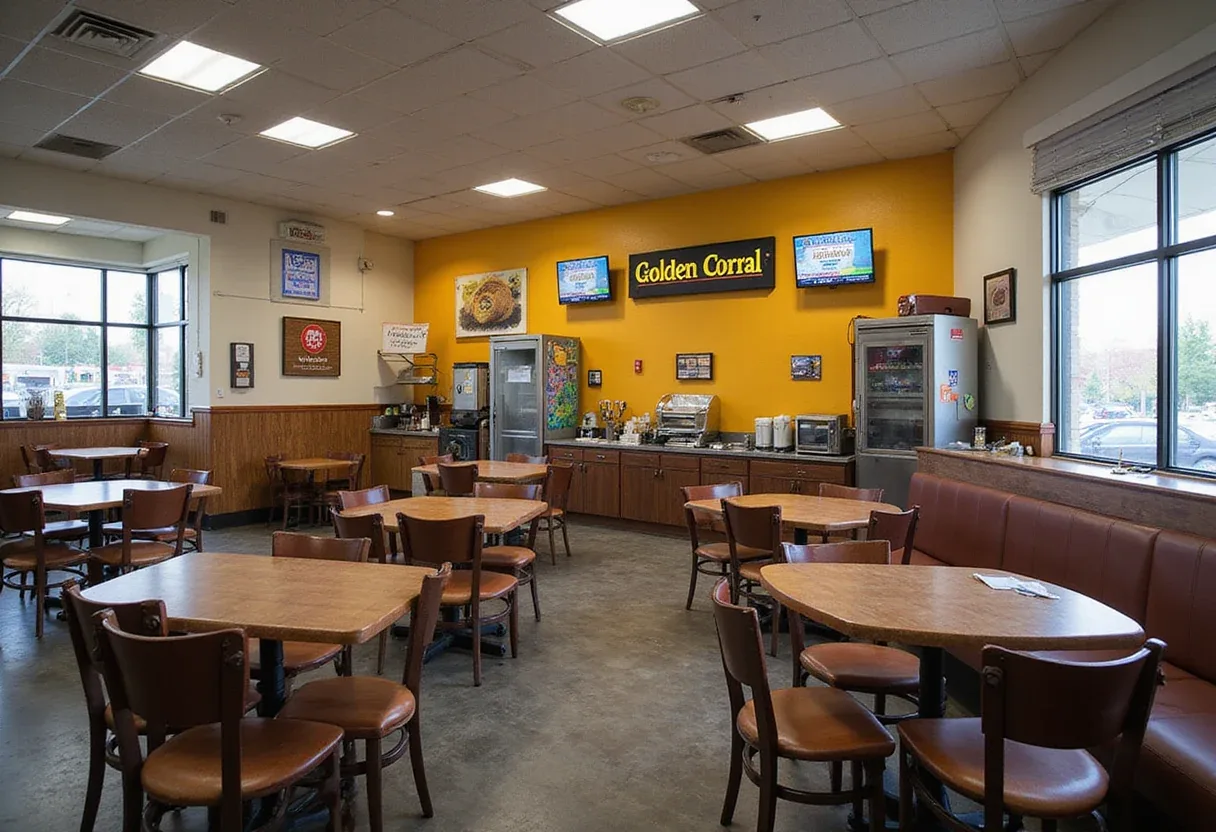
Golden Corral Is Closing More Restaurants Than Usual This Year
Golden Corral is closing more restaurants than usual this year, an above-baseline shutdown count that puts the pressure on buffet economics — food cost, labor and thinning traffic — in sharp relief.

Golden Corral, the family-style buffet chain, is closing more restaurants than usual this year, a shift that stands out against the brand's normal, slower churn of underperforming locations. Nation's Restaurant News first reported the elevated closure count, citing the company's own acknowledgment that 2025's shutdowns are running above its typical pace.
For a chain built on volume — all-you-can-eat buffets that only work when traffic and food cost stay in balance — an unusual cluster of closures is rarely about one bad quarter. It's usually about rent, labor, and the math of running a high-waste, high-labor format in markets where customer counts have thinned.
What does this change for operators?
The practical question here is straightforward: is this a company-specific housecleaning, or a read on the buffet segment? Golden Corral has historically closed a handful of restaurants in any given year as leases lapse and franchisees exit weak markets. This year's count runs above that baseline. The company has framed the closures as part of its routine review of performance, but the acceleration comes while family dining overall faces traffic pressure from value wars on the quick-service side and rising checks on the casual side.
The buffet model is uniquely exposed in that squeeze. Buffets carry heavy food-cost volatility — you cook for projected covers, not confirmed orders — and they can't easily reprice per plate when commodity costs jump. Labor is equally rigid, since serving lines need staffing whether the dining room is full or half-empty. When a location's traffic slips, the margin damage compounds fast.
Franchise structure matters too. Golden Corral operates as a heavily franchised system, which means closure decisions often sit with individual owners reading their own P&Ls rather than with headquarters. A cluster of franchisee exits in a single year typically signals that unit-level economics — not brand strategy — drove the doors shut.
Why closures cluster now
Restaurant closures tend to bunch around lease renewals, and operators holding expiring leases in the current cost environment face a harder go/no-go decision than they would have a few years back. Insurance, labor, and occupancy costs have all climbed, and a buffet that was marginally profitable before can tip underwater without any change in how it's run.
There's also the traffic question. Family dining has been losing occasions to fast value menus, and buffet chains depend on large parties and repeat visits — the most discretionary occasions in the category — to fill their oversized dining rooms.
For competitors and landlords, the closures are a signal worth watching. If the elevated pace continues into next year, it would mark a structural retrenchment for the largest player in family-style buffet. If it levels off, 2025 may simply be the year Golden Corral cleared out its weakest locations and reset the footprint for the units that remain.
Either way, the chain hasn't signaled a retreat from the format itself, and the closures-to-openings ratio — not the raw closure count — will tell the real story when the next round of unit data lands.
More from Daniel Okafor
Show full bio
Correspondent covering companies, deals and strategy in Restaurant and hotel operations at The Pass Brief.
508 articles