Chomps Attracts $350 Million Sixth Street Minority Stake
Chomps attracted a $350 million minority investment from Sixth Street, which bought from existing shareholders and will join the board as the meat-snack maker targets innovation and expansion.
By Elena Vasquez
Chomps, a U.S. meat-snacks manufacturer, has attracted a $350 million investment from Sixth Street, which acquired a minority stake from existing shareholders. The private-equity firm did not reveal the stake size, and the release did not specify how much, if any, of the proceeds would reach Chomps.
The disclosed purchase makes this an ownership transfer, not a quantified capital injection into the company. Because no valuation or use of proceeds is disclosed, readers cannot quantify the ownership split, capital available for production or financial support for expansion.
The deal adds an institutional backer alongside Stride Consumer Partners, which already held a minority interest in Chomps. Chomps’ existing leadership team will continue running the business, which will remain independent. Sixth Street will serve as a strategic partner alongside management and the company’s current investors.
In a Nov. 17 statement, Sixth Street said the investors plan to round out Chomps’ capabilities as the company pursues key innovation initiatives and new market expansion. The announcement gives no timetable, funding allocation or operating target.
Kayvan Heravi, Sixth Street’s partner and co-head of consumer and retail, will work with Chomps co-founders Pete Maldonado and Rashid Ali as the meat-snacks producer enters what he called its next phase of growth. He said: “The momentum behind the business is incredible and we believe Chomps is just getting started.”
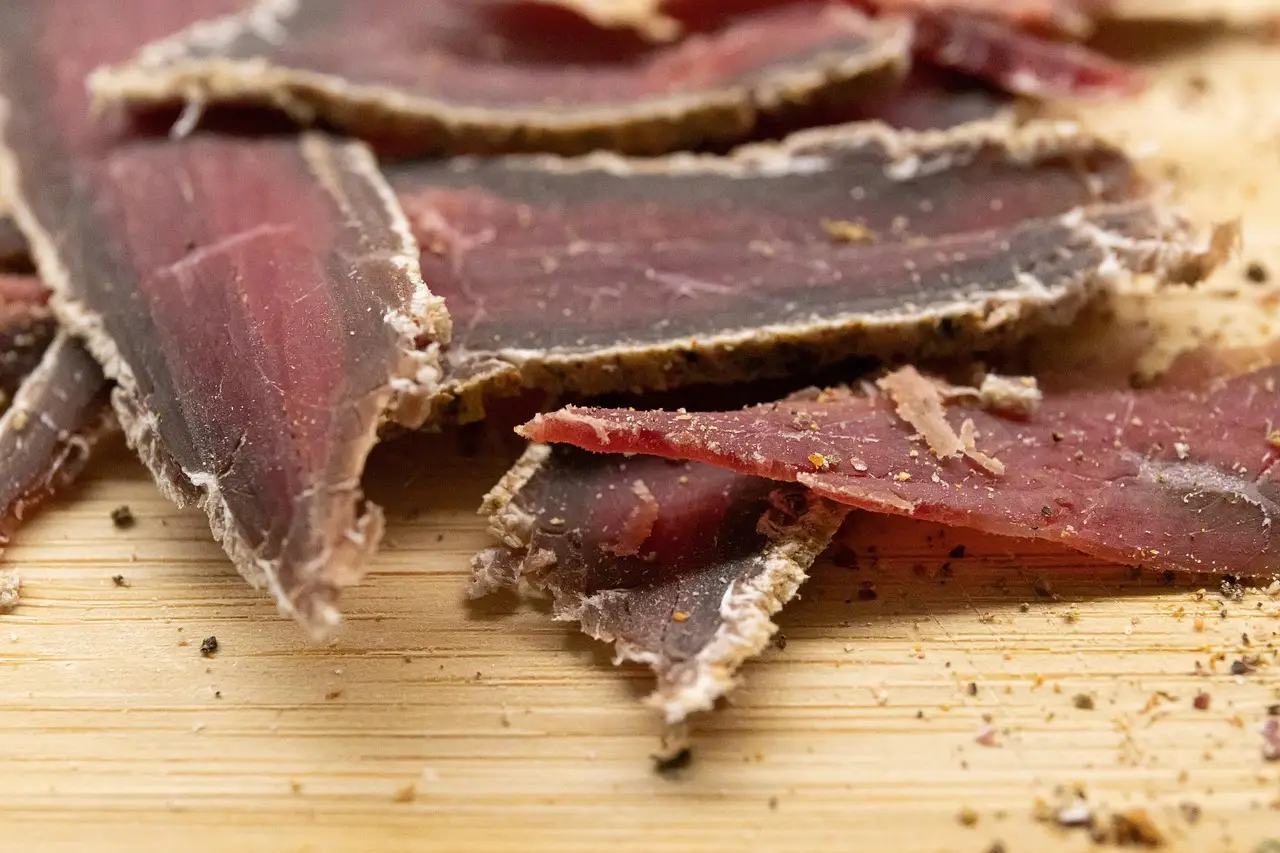
Founded in 2012, Chomps manufactures meat sticks made from beef, chicken, turkey and venison. The company markets its products as free from antibiotics and artificial preservatives, with no added sugar. For retail buyers, these claims provide sourcing and formulation criteria alongside a four-protein assortment.
Chomps’ products are stocked at Walmart, Target and Kroger, and the company also sells online. The announcement does not report store counts, unit sales, revenue, gross margin, pricing or retailer concentration. As a result, the transaction does not permit an independent assessment of production costs, labor costs or profitability.
No wholesale price, case cost or cost premium tied to its antibiotic-free and no-added-sugar positioning appears in the release. Without those figures, the announcement cannot show whether the product claims support shelf pricing and margins or require higher sourcing and production costs.
Sixth Street will place two executives on Chomps’ board: Heravi and Phil Marineau. Marineau, a senior adviser at the firm, held senior roles at PepsiCo and U.S. dairy group Dean Foods in the 1990s. He also served as CEO of Levi Strauss & Co. for seven years, through 2006. The appointments add board representation without changing the stated management structure.
Ali said: “Sixth Street brings financial expertise, scale and a track record of helping businesses reach their full potential. Together with Stride, we have two great partners supporting our long-term vision while allowing us to continue operating as an independent company.” He described the structure: two institutional minority backers, current management and continued independent operation.
What does the $350 million investment change for Chomps?
Immediately, Chomps gains a new minority owner, two Sixth Street board seats and an additional institutional partner for innovation and market expansion. Its current leadership team remains in charge, while Sixth Street and Stride hold minority interests.
Sixth Street identified no plant expansion, acquisition, new product, price increase or capital-spending plan. It also provided no target for sales, gross margin or labor productivity. What changes first is therefore sponsor backing and board representation, while any effect on manufacturing output, cost of goods or operating margin remains unquantified.
For Chomps, the next proof points are sales and distribution gains tied to the stated innovation and expansion work, plus future disclosure on pricing, gross margin and production costs. Without a timetable or operating targets, the $350 million figure establishes the scale of the sponsor backing, not the scale of the operating benefit.
More from Elena Vasquez
Show full bio
News editor covering people, launches and day-to-day practice in Restaurant and hotel operations at The Pass Brief.
785 articles