Bernard Matthews keeps Derby plant open, but 100-150 jobs remain at risk
Bernard Matthews reversed a year-end closure of its Derby poultry plant after signing a new anchor customer. About 400 jobs will stay, but 100-150 remain under threat.
By Olivia Hart
About 400 jobs at Bernard Matthews’ Derby poultry-processing plant will be retained after the company reversed its year-end closure plan on Thursday, November 5, although 100 to 150 positions remain at risk.
The reversal follows the company’s securing of a “new anchor customer,” whose contract brings more production volume and offers a basis for future growth. Bernard Matthews had announced in August that it would close the site in the English Midlands by the end of the year.
What changes for Derby workers?
Roughly 400 of the jobs threatened by the proposed closure will stay at the site under the new contract. The announcement, however, still places another 100 to 150 posts at risk, so the factory’s survival does not remove the restructuring pressure on its workforce.
“We are pleased to confirm that the Derby site will remain operational and securing this new customer provides a stronger foundation from which to build a sustainable future,” a spokesperson said.
The mechanism is volume. The new customer is expected to bring more output to Derby, supporting ongoing operations and offering a platform for growth. That makes the contract an economic bridge for the plant, but the unresolved positions show that restoring volume has not yet translated into job security for the entire workforce.
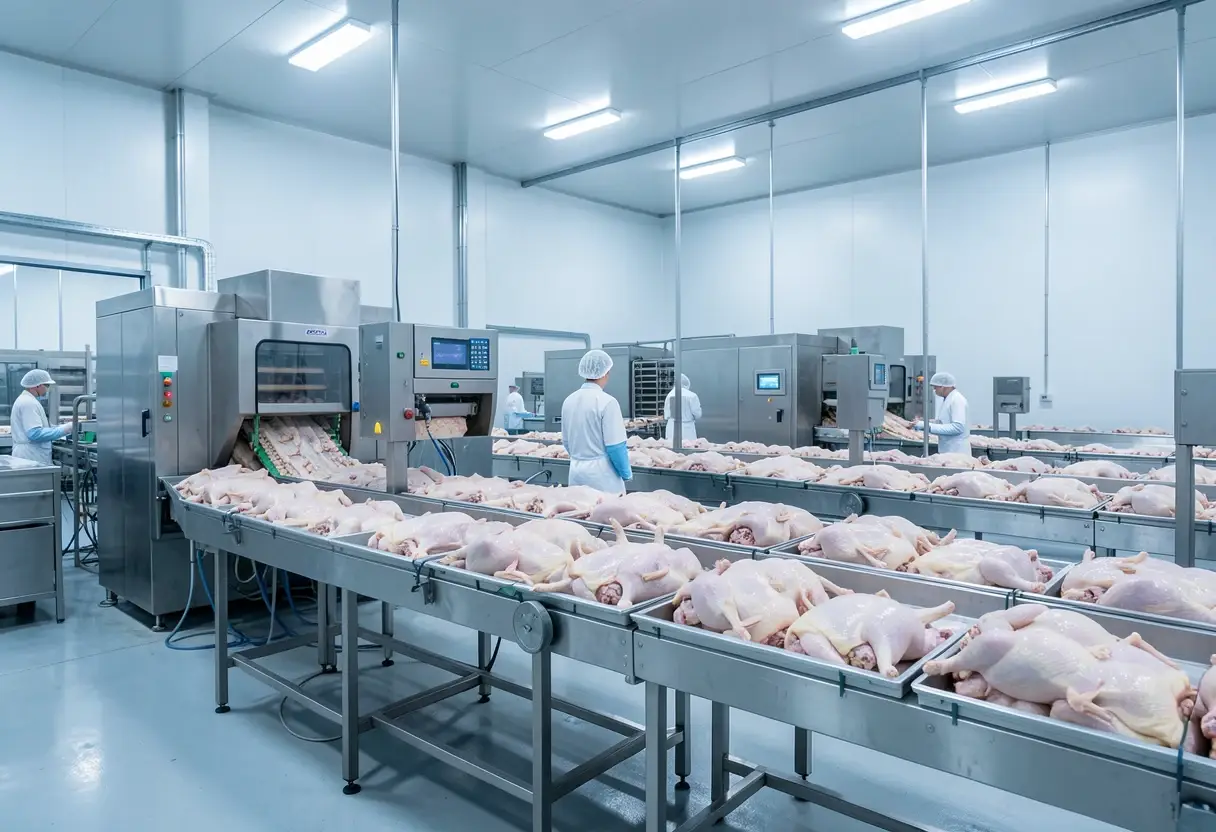
The Derby factory produces cooked and ready-to-cook poultry products for UK retailers. Bernard Matthews also committed to supporting affected workers and continuing to work with local agencies to identify alternative jobs in the area where possible. Just Food has approached the company for additional details.
Economically, the decision follows Bernard Matthews’ August warning that the business faced “continued significant financial losses.” It also cited “external economic challenges” and geopolitical pressures, specifically Brexit, Covid-19, and the conflicts in Ukraine and the Middle East. The new contract addresses the plant’s immediate volume needs, although the announcement gives no contract value, margin, labor-cost percentage or named customer with which to judge the recovery’s financial scale.
Bernard Matthews has belonged to Boparan Private Office since 2016, when BPO bought the company out of administration. BPO is the investment vehicle of Ranjit Singh Boparan, who also owns 2 Sisters Food Group. The Derby decision therefore sits within a portfolio that is simultaneously investing in poultry processing and reducing jobs at other facilities.
- In August, Boparan-owned 2 Sisters announced a “restructure” at its Rogerstone ready-meals factory in Newport, South Wales, placing 80 jobs at risk. The site employs 1,600 people and makes chilled own-label Indian, Italian and British ready meals.
- In February, Boparan acquired German poultry processor Heidemark, which will join BPO-owned Storteboom Food Group.
Together, those moves show the scale of the current portfolio adjustment: 400 Derby roles are being protected, 100 to 150 more face uncertainty, and 80 positions are under threat at Rogerstone, which has a workforce of 1,600. No overall group headcount, earnings or capital figure was provided, so those job totals cannot be converted into a portfolio-wide percentage.
The next test is whether added production volume produces durable margins and enough work to resolve the remaining 100 to 150 posts. Disclosure of the anchor customer’s identity, contract duration and a restructuring timetable would clarify whether the Derby reversal marks a stable recovery or only a temporary reprieve.
More from Olivia Hart
Show full bio
Staff writer covering regulation, policy and their impact on Restaurant and hotel operations at The Pass Brief.
641 articles