Arla opens review of 380-worker ice-cream unit after DMK merger
Arla's outcome-open review covers one German ice-cream plant, about 380 jobs and no proprietary brands, less than six months after the DMK merger took effect on June 1.
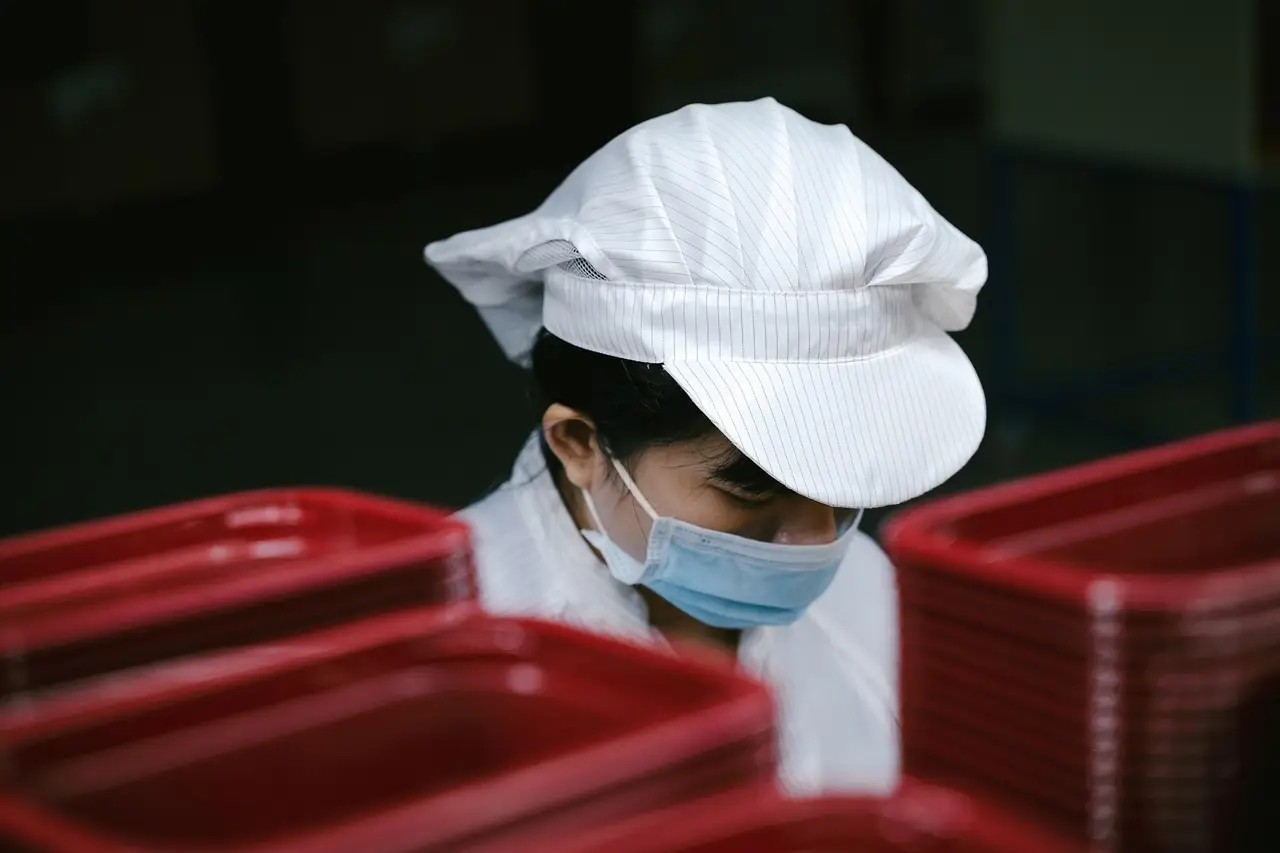
Arla Foods has opened an “outcome-open process” to review the future ownership of an ice-cream business built around one German plant and about 380 employees, less than six months after its merger with German peer DMK took effect on June 1.
In a Nov. 19 statement, the Danish cooperative said the review followed a “thorough strategic assessment.” The operation comprises one manufacturing facility in North Rhine-Westphalia, Germany, and no proprietary brands are included in the process.
The business supplies ice cream to manufacturers under licensing agreements and produces private-label products for retailers. With no proprietary brands in scope, the factory, customer relationships and 380-person workforce sit at the center of the ownership decision.
Arla chief integration officer Ingo Müller said the company was “taking this step from a good position.” He also said: “Our ice-cream business has attractive market positions, long-standing customer relationships and, above all, highly experienced and committed employees.”
Müller added: “We want to create a perspective in which ice cream receives the strategic attention and opportunities the business deserves. What matters to us is finding a good home for the business and its employees.” That framing presents the review as a search for the right ownership structure, not an admission that the operation lacks strategic value.
Arla said the review was “limited exclusively to the ice cream business and should not be interpreted as a signal regarding other areas” of the company. That separation matters because broader integration work in Germany is already underway.
Earlier in November, Arla launched a voluntary redundancy program for German office staff as it targets €37 million ($40.7 million) in cost savings. Production roles were unaffected, and the announcement did not connect the office program to the 380 ice-cream jobs.
The June 1 merger created what the companies described as “the largest dairy co-operative in Europe,” bringing together 11,200 dairy farmers across seven European countries. Pro-forma revenue exceeded €20 billion, although those figures describe the enlarged cooperative rather than the ice-cream operation.
Arla disclosed no ice-cream revenue, margin, cost-of-goods rate or labor percentage. The available numbers therefore establish the scale of the merger and the German cost program, but not the reviewed unit’s profitability or the pricing and sourcing effects of a transfer.
The review also arrives as large food companies reduce direct exposure to ice cream, though their routes differ. Unilever spun off its ice-cream operations into The Magnum Ice Cream Company, retains nearly 20% and plans to wind down that stake gradually. Nestlé is selling the ice-cream assets outside its Froneri joint venture with PAI Partners.
In contrast, European ice-cream producer Glacier is expanding. In July, the company said it is investing €45 million in ice-cream plants in Italy and Belgium, including two new production lines in Italy for extruded ice creams and linear-moulded ice lollies.
The contrast is about capital allocation and manufacturing footprint: Unilever and Nestlé are pruning direct exposure while Glacier adds capacity. For manufacturers and retailers, the practical issue is whether manufacturing continuity survives any change in Arla’s ownership strategy.
What does the review change for the 380-person ice-cream operation?
For now, it changes little operationally. The plant remains within Arla during the review, and the announcement names no preferred outcome, future owner, completion date, sale price or cost estimate.
Müller’s stated aim of finding the business “a good home” keeps a transfer central to the discussion, while the “outcome-open” wording leaves room for more than one structure. Until Arla sets terms, the announcement provides no basis to calculate the effect on employment, customer relationships or production capacity.
For employees and industrial buyers, the next test is whether Arla can find an ownership structure that preserves the site’s 380 staff and business-to-business supply relationships. That outcome will determine whether ice cream leaves the enlarged cooperative or remains a stand-alone platform for strategic attention and growth.
More from Olivia Hart
Show full bio
Staff writer covering regulation, policy and their impact on Restaurant and hotel operations at The Pass Brief.
788 articles