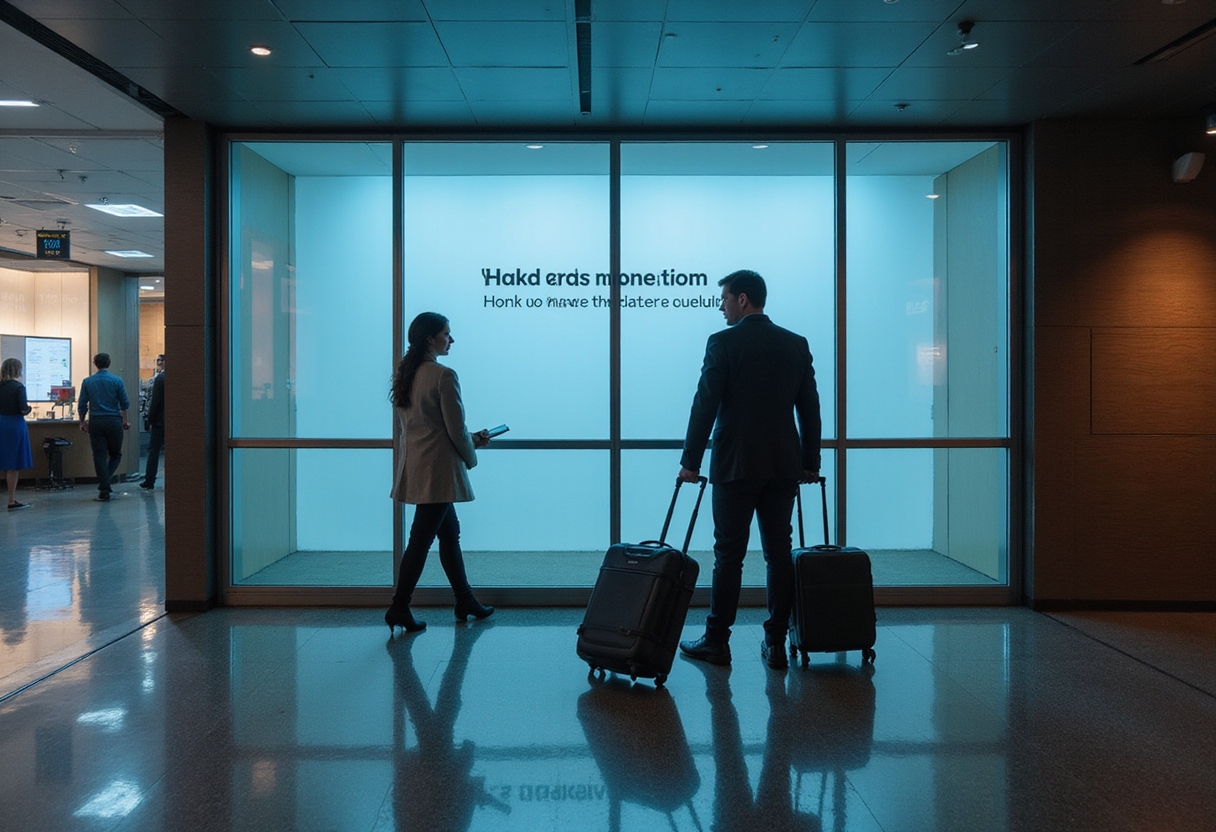
AI Delivers Commission-Free Guests. Hotel Websites Send Them to OTAs
AI tools are delivering commission-free shortlisted guests to independent hotels — and losing them at the website. Meanwhile 5% RevPAR growth masks rising insurance, labor and debt costs.
AI search tools are sending pre-booking discovery traffic to independent hotels without charging a commission — and most hotel websites are then failing to convert those visits, routing the booking back to an OTA after the free discovery has already happened. That finding, from Markus Busch at hospitality.today and reconline AG, framed a Monday in which the industry's AI argument and its profitability problem collided head-on.
Busch identifies what he calls the Shortlist Effect: AI tools surface independent hotels in pre-booking research in ways OTA browse never did, and because the discovery happens inside ChatGPT or Gemini rather than on a booking platform, no commission is charged at the discovery stage. The guest arrives at the hotel website already shortlisted and ready to book direct. Then the website loses her.
What does the fix actually require?
Not an AI booking interface. The infrastructure gap, according to Busch, is a converting website with three elements:
- Accurate all-in pricing
- Frictionless checkout
- A digital wallet option
The Shortlist Effect delivers a commission-free guest to the front door, Busch argues. The hotel's website decides whether she comes in. For independent operators, that reframes AI from a distribution threat into a direct-booking channel — but only for the properties that fix conversion first.
Are hotel staff already computer operators?
Martin Soler of Soler & Associates pushes the AI conversation below the distribution layer. His argument: the industry's problem with AI is not that it might replace humans, but that computers already have.
Hotel staff today spend significant portions of their shifts entering data, navigating fragmented systems, resolving integration errors, and executing rote tasks defined by software rather than by guest need. The genuine hospitality skill — reading a guest's state, responding to an unspoken need, making a judgment call in a difficult situation — has been crowded out by system compliance. AI, Soler argues, should strip away the computer-operator work and restore space for genuine human responsibility.
Are Morch's companion piece sharpens the accountability question: if AI saved your hotel team ten hours this week but those hours went to cost cuts rather than guest contact, the promise of AI-for-hospitality is not being kept. Morch draws on Mews research finding 75% of travelers say good hospitality depends on people. A hotel that cut headcount on AI efficiency is not the same as a hotel that redeployed that time toward service.
Why is 5% RevPAR growth a warning sign?
HVS analysts Luigi Major, Ryan Mark and Marcus Lee distil the 2026 Lodging Conference into its most uncomfortable finding: a 5% RevPAR growth forecast for year-end sits alongside rising insurance, labor and debt service costs that are compressing margins faster than the top line is growing.
The debt layer compounds the squeeze. Loan maturities concentrated in 2026 and 2027 create refinancing pressure at exactly the moment cap rates and debt terms are less favorable than when those loans originated. The RevPAR headline is real; the profitability story underneath it is not.
The piece extends the metrics argument Erik Tengen made on Friday — TRevPAR fell while RevPAR rose — by adding the cost layer. Operators entering 2027 budget conversations armed only with RevPAR figures will present an incomplete picture to ownership groups already asking harder questions about NOI, debt coverage and capital needs.
Signals
- Waldorf Astoria New York reopened after a six-year, full-building renovation that replaced its famous ballrooms and added 375 private residences above the hotel floors. Ryan Walker of TSMA Consulting asks whether the 1931 Park Avenue landmark can retain its status when every interior surface has changed.
- Google merged Hotel Ads and Search into one AI-powered Travel format. Quentin Lederer of Cendyn says hotels need live rate and availability feeds, clean first-party data, and campaign structure built for AI optimization — ahead of general release. Hotels without the data infrastructure will not participate effectively in the format replacing the campaign types most currently run.
- WTTC released eight priorities for European tourism at its 26th Global Summit in Valletta, covering visa reform, AI adoption, sustainability investment and workforce development.
- Simone Puorto's new book examines fan pilgrimages to Ian Curtis's grave as a lens on music and dark tourism, arguing places travelers seek are defined by story and meaning rather than amenity inventory.
- Openings: InterContinental Taipei (IHG, Greater China); Denū Hotel & Spa (downtown Phoenix); Fraser Place Roppongi, Tokyo; Loews Nashville Hotel's multimillion-dollar transformation; Anantara Retreat Rabat (Minor Hotels' Morocco debut); Mereshi Safari Camp Serengeti joins Autograph Collection ahead of a November opening.
The through-line for operators: AI is now generating both the traffic and the labor capacity — whether websites convert and whether freed hours reach guests will decide who captures the value before the 2026 debt wall arrives.
More from Marcus Bennett
Show full bio
Market editor covering media and advertising at The Pass Brief.
267 articles