19% of Hotel Photos Now Show AI Signs, and Guests Cannot Tell
Some 19% of 25,550 hotel photos show AI signs, per a 2026 Berlin study. Only 5% of surveyed travelers spotted every real image. An "Arrival Test" proposes the line.
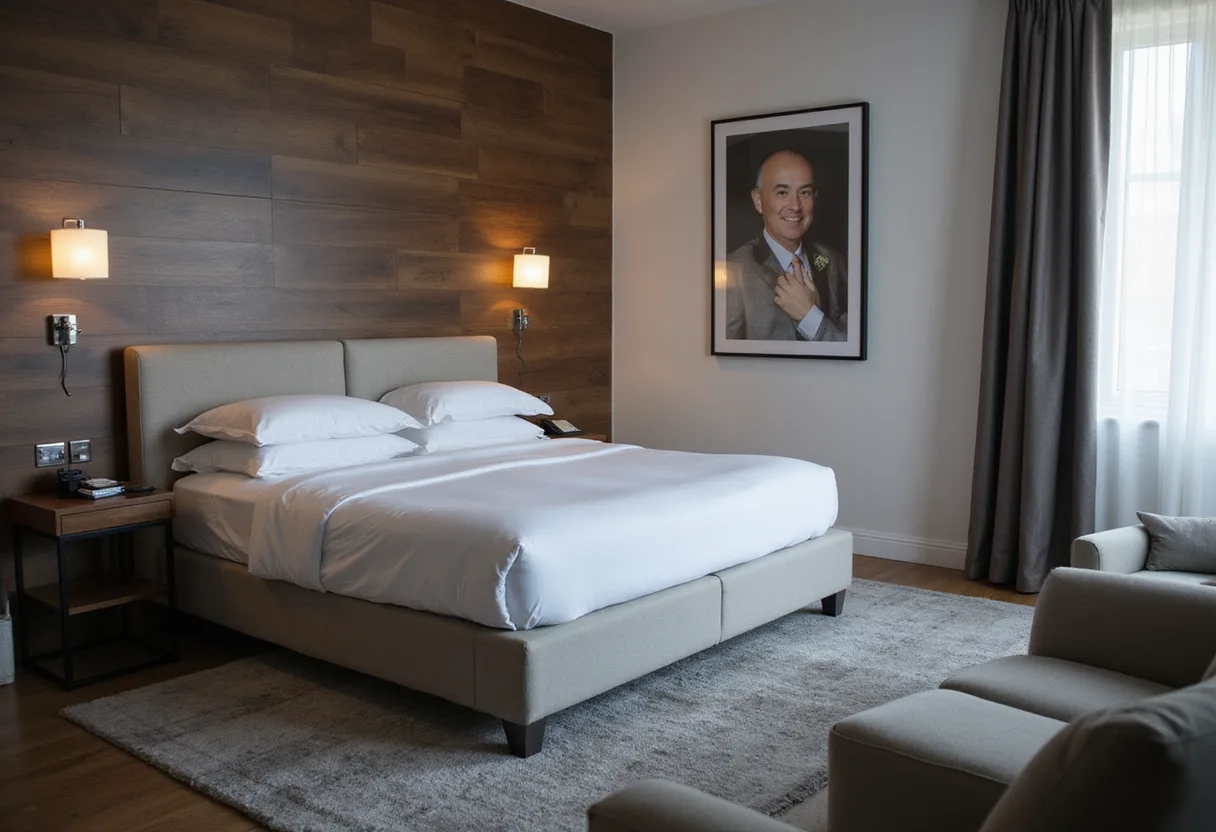
Around 19% of 25,550 hotel photos carry at least one sign of AI generation or editing, according to a May 2026 analysis by the Berlin agency ABCD and the forensic verification firm ContentGuard.me. The study covered 700 hotels across seven destinations. The method flags a photo on a single signal and does not separate fully generated images from enhanced ones, but the direction is clear.
Urban properties lead. Some 36% of photos were flagged in Hamburg and 27% in Berlin, against 9% in Mallorca. The authors attribute part of the gap to the landmarks and city views that dominate urban galleries, where there is more to alter.
Can guests tell the difference?
No. In a Talker Research survey of 2,000 Americans, commissioned by the Tennessee Department of Tourist Development, only 5% identified the real photo in all three pairs shown. Yet 74% said they would not book a trip without seeing photos first, and seven in ten said they would trust imagery more from a destination that confirms it is real.
Acceptance is conditional, not absent. A Clutch survey of 401 American consumers found 82% accept AI imagery in at least some contexts. The figure falls to 27% when AI shows products that already exist. Guests are not refusing imagination. They are refusing to be misled about what awaits them.
What does regulation require?
The EU AI Act's transparency rules have applied since August 2, 2026. A realistic image of a real place that AI has generated or altered may now require a visible disclosure. That deadline gives European operators a compliance parameter, not a stylistic suggestion.
The Arrival Test
The author of the source piece, an executive at the agency Influence Society, proposes a single screening question before publication: would a guest who booked because of this image recognize the place on arrival? Careful retouching passes. Enlarging a room or erasing a crane from the view does not.
What must stay true:
- Room size and layout, materials, bathroom condition
- The balcony view, the pool, the dishes that reach the table
A guest studying these details is looking for evidence, and the property remains the reference point.
What can be reimagined, with disclosure:
- Season, weather and hour of day
- Styling and the presence of people
- Pre-opening visuals built from the architect's 3D models before rooms can be photographed
A summer terrace reworked as a winter afternoon sets a mood without changing what the guest finds, much as photographers have always chosen the hour and styling of a shoot.
Who makes the decision?
The argument draws on two precedents. Interior architect Johan Thuillot of RDAI used Grasshopper, a parametric modeling tool, to translate the microscopic structure of butterfly wings and spiderwebs into rug patterns knotted by hand at roughly 400 knots, or seven centimeters, a day. The layouts went back and forth with the textile artists of Creative Matters for nearly two years. "You can feel this is handmade," says artist Anna Panosyan. Software proposed; people decided.
The second precedent is Dieter Rams, now 94. Klaus Klemp, managing director of the Dieter and Ingeborg Rams Foundation, describes a designer who asks whether an object is necessary before picking up a pencil. "Less, but better" was never a look, Klemp notes. It is a way of thinking that precedes making.
Influence Society applies the principle through its AI Studio, a system steered by art directors rather than a single prompt. For a wedding film for the venue The Six Bells, the studio generated the cast from photographs of the real patio and tent. The tent, curtains, furniture, light and view are the venue's own; the couple, guests and table setting are generated. The finished film runs 25 seconds, and each image carries a statement of what was created.
The economics are straightforward. As generation becomes faster and cheaper, the scarce input is editorial judgment — someone who knows which visual exaggeration would feel alien to the brand and will set aside an image that does not belong to it. As AI output multiplies across hotel marketing, the brands that win the booking are likely to be those whose images survive the arrival test.
More from Rebecca Stone
Show full bio
Senior reporter covering technology and product news in Restaurant and hotel operations at The Pass Brief.
711 articles